Based on my personal experience as a mother, caregiver to the elderly, and witness to chronic kidney, liver, and intestinal diseases running through my family, I can confidently assert that modern medical science has regressed rather than progressed in several critical areas.
The first conspicuous indicator is the relentless emergence of new diseases, each bearing a name more ominous than its predecessor. Flu vaccinations maintain potency for a mere eight months, while Dubai—blessed with the world’s busiest airport—welcomes a novel strain of influenza approximately every eight weeks. During one particularly memorable year, I found myself on antibiotics bimonthly: a severe ear infection transitioned into bronchitis, which then evolved into a particularly nasty UTI that somehow metamorphosed into pneumonia. Pneumonia, as anyone who’s had the pleasure will attest, requires months of recovery—only for me to fall prey to COVID-19 shortly thereafter. The sole silver lining? After surviving that ordeal, COVID felt almost anticlimactic.
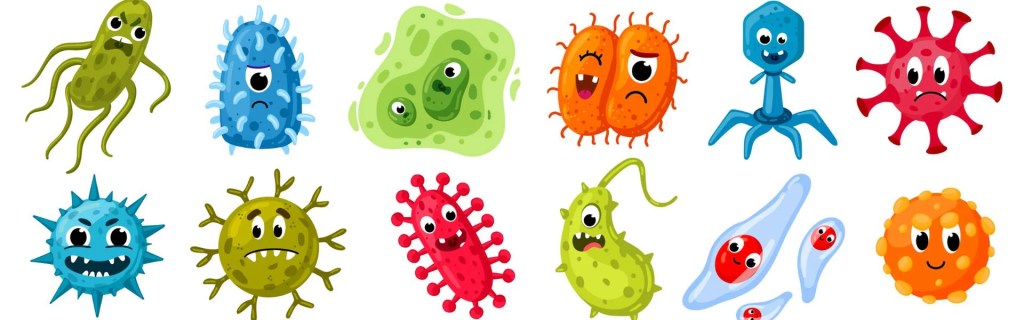
Whether bacterial or viral in nature, even elementary infections now strike with unprecedented severity. Humanity’s obsession with acceleration has inadvertently turbocharged our germs as well.
The more accessible travel becomes and the more ardently we pursue technological advancement—at the expense of round-the-clock work schedules, unrealistic deadlines that mock our biological limitations, and unsustainable development—the more vulnerable our fragile bodies become to infections with lingering consequences. Physical exercise has been relegated to optional status as companies like Xiaomi boast electric vehicle assembly in barely over a minute. Personal transportation is cheaper and more readily available than ever. Countless tasks that once demanded physical labor have been usurped by robotic appendages, rendering populations not merely unemployed, but fundamentally sedentary.
Compounding this exercise deficit is our food industry’s alarming trajectory. It remains fixated on proliferating products with ingredient lists so lengthy that consumers grow dizzy attempting to decipher them—never mind comprehending which toxic chemicals they’re unwittingly ingesting. Most ingredients masquerade under such impressively polysyllabic nomenclature that the average person simply surrenders, unable to navigate words containing more letters than seems reasonable for human pronunciation.
Each discovery of cost-effective production methods spawns an industry determined to prolong its financial hegemony through half-truths or, in egregious cases, outright fabrication. The infant formula industry infamously insisted that breast milk offered negligible benefits compared to their products. For decades, women were effectively coerced into formula feeding until medical research finally mustered the courage to challenge these manufacturers. The sugar industry has proven equally culpable, alongside the frozen foods sector, the bleached flour and white bread conglomerates, hydrogenated and seed oil producers, and the GMO enterprises. The catalogue is endless.
When an individual walks into a doctor’s office with pre-diabetic or diabetic symptoms, more often than not, they will be placed on insulin or told not to eat complex carbohydrates and sugar. They are rarely told the condition is reversible out of sheer laziness on the practitioner’s part. I know enough people who have been highly diabetic, only to have fully reversed the condition through diet and exercise without ever having swallowed a relevant pill. But this, my friends, does not benefit the global pharmaceutical industry which now boasts a value of approximately $1.6 trillion.
Yet we must never lose sight of the genuine adversary, the authentic nemesis of global health—the pharmaceutical industry. Not only does it expand at exponential rates by introducing newly formulated drugs lacking sufficient empirical validation, but it also actively obscures straightforward remedies for conditions the world has been conditioned to consider incurable. Furthermore, I would wager that it is under the considerable influence of these corporations that medical education spans such prolonged periods yet delivers such woefully incomplete instruction.
It defies logic that one can claim expertise in the human body while systematically disregarding what that body consumes. I have encountered numerous physicians preoccupied with determining which drug will heal you, yet who never inquire about your dietary habits. They fail to investigate thoroughly enough to ascertain the fundamental “Why?” underlying your condition. A handful of blood tests rarely illuminates the complete picture. To compound matters, nutrition constitutes an entire field of study only semi-present in medical school curricula. In my estimation, every physician should simultaneously be a certified nutritionist.
Moreover, hospitals should implement comprehensive recovery protocols or convene multidisciplinary panels to address each ailment holistically. Without an integrated approach encompassing medical science, nutrition, time-tested natural remedies, and spiritual healing, prescribing medications often proves futile. It’s tantamount to administering a homeopathic dose of paracetamol to a patient suffering from high-grade fever: you’re merely grazing the proverbial tip of the iceberg while doing a profound disservice to both your noble profession and your patient.
I have recently devoted considerable time to researching home remedies and have also compiled a collection of those my husband’s grandmother used to prescribe. They demonstrably work, produce no adverse effects, and facilitate holistic healing of the body. Despite being unbacked by science, I feel safer employing these decades-old tried and tested methods which have empirical data voting in their favour rather than opting for science that throws a “fact”, retracts it a few years later only to replace it with something opposing the first fact only as bizarre in nature.
We would do well to remember the hadith from Sunan Ibn Majah, which articulates a reassuring truth: Allah has not created any disease without also creating its cure (Sunan Ibn Majah 3436). This encompasses bodily, mental, and spiritual afflictions alike. The predicament, however, lies not in the non-existence of remedies but in our systematic misdirection regarding where authentic healing is to be found. One suspects that if modern medicine redirected even a fraction of its attention from synthesizing new pharmaceuticals toward rediscovering these pre-existing remedies, patients might experience actual recovery rather than perpetual symptom management.
 Farheen Anwar
Leave a comment